
Online Encyclopedia of Dental Trauma
Original price was: 400.00$.139.00$Current price is: 139.00$.
Paul Abbott’s course on dental trauma is a set of structured lectures filled with scientifically based information with a demonstration of vivid clinical cases.
You will receive diagnostic protocols, first aid and treatment of dental trauma and soft tissue injuries.
You will also learn:
-
The reaction of teeth and oral tissues to injury
-
Protocols for the diagnosis and treatment of external and internal resorption
-
General principles of treatment of dental and oral tissue injuries
-
The use of local and systemic medications
-
Principles of emergency care for various injuries of the maxillofacial region.
The full course program
-
1. What Happens When Following Dental and Oral Injuries. Introductory lesson
Lesson program:
-
A. Responses of the Dental and Oral Tissues to Injury
-
B. Factors Affecting Healing of the Dental and Oral Tissues following Trauma
-
Common dental and oral traumatic injuries
-
Potential consequences of the various injuries to the teeth and oral tissues including the long-term prognosis for each tissue
-
Different healing responses of the pulp, peri-radicular and soft tissues following trauma
-
Factors that affect the healing of these tissues following trauma
-
Management plans to minimise the consequences of trauma to the teeth.
Recommended for: Therapists, Endodontists, Maxillofacial surgeons, General dentists.
2. What Happens When Following Dental and Oral Injuries
Lesson program:
-
A. Responses of the Dental and Oral Tissues to Injury
-
B. Factors Affecting Healing of the Dental and Oral Tissues following Trauma
-
Common dental and oral traumatic injuries
-
Potential consequences of the various injuries to the teeth and oral tissues including the long-term prognosis for each tissue
-
Different healing responses of the pulp, peri-radicular and soft tissues following trauma
-
Factors that affect the healing of these tissues following trauma
-
Management plans to minimise the consequences of trauma to the teeth.
Recommended for: Therapists, Endodontists, Maxillofacial surgeons, General dentists.
3. Tooth Resorption and Dental Trauma
Lesson program:
-
A. General Principles and Classification of Resorption
-
B. External Surface Resorption
-
C. Ankylosis
-
D. External Replacement Resorption
-
E. External Inflammatory Resorption – Part 1
-
Different types of external tooth resorption that are associated with trauma to the teeth
-
Pathogenesis of the different types of external tooth resorption related to trauma
-
Factors that predispose teeth to external tooth resorption during and after trauma to the tooth
-
Ankylosis and its relationship to trauma and the different types of external resorption
-
Diagnosis and management of external surface resorption
-
Difference between external replacement resorption and external inflammatory resorption
-
Diagnosis and management of external replacement resorption
-
Strategies to reduce the chances of external replacement resorption occurring following trauma to a tooth.
Recommended for: Therapists, Endodontists, Maxillofacial surgeons, General dentists.
4. External Inflammatory Resorption
Lesson program:
-
A. Preventive Management
-
B. Interceptive Management
-
Pathogenesis of external inflammatory resorption related to trauma
-
Pathogenesis of external inflammatory resorption when related to long-standing infected root canal systems
-
Diagnosis and management of external inflammatory resorption
-
Strategies to prevent external inflammatory resorption following specific injuries to the teeth, including when root canal treatment should be commenced
-
Strategies to manage external inflammatory resorption when it is already present – i.e. the interceptive management of this resorption
-
Long-term prognosis of teeth that have had external inflammatory resorption.
Recommended for: Therapists, Endodontists, Maxillofacial surgeons, General dentists.
5. General Principles for Managing Traumatic Dental Injuries
Lesson program:
-
General principles for managing trauma to the teeth and oral tissues
-
Key elements of the examination and assessment of patients following trauma to the teeth and oral region
-
Importance of pulp sensibility tests and radiographs following trauma to the teeth
-
Different types of splints used to stabilize the teeth and the alveolar bone following trauma
-
Indications for the use of the different types of splints and their duration of use
-
Options available for emergency management of pulp exposures, especially with a view to preservation of the pulp
-
Management of post-operative discomfort/pain following the initial management of traumatic dental injuries
-
The use of systemic and local medications following trauma to the teeth and oral region
-
The importance of, and the need for, follow-ups for patients who have had trauma to the teeth and oral region
-
The follow-up schedule following trauma to the teeth and oral region.
Recommended for: Therapists, Endodontists, Maxillofacial surgeons, General dentists.
6. Emergency Management of Specific Traumatic Dental Injuries
Lesson program:
-
A. Fractures: Crown fractures, Crown-root fractures
-
B. Concussion and Subluxation
-
C. Extrusion and Lateral Luxation
-
D. Intrusion and Avulsion
-
The emergency management of specific injuries to the teeth and oral tissues
-
Management of crown and crown-root fractures in the emergency situation
-
Management of tooth concussion and subluxation injuries
-
Methods to reposition teeth that have been extruded, laterally luxated and intruded
-
The emergency management of teeth following extrusion and lateral luxation
-
The options for management of intruded teeth in the emergency setting along with the advantages and disadvantages of each option
-
The emergency management of avulsed teeth
-
The medium-term and long-term follow-up management for these injuries
-
Prognosis for teeth following each of the above injuries.
Recommended for: Therapists, Endodontists, Maxillofacial surgeons, General dentists.
7. Assessment and Management of Transverse Root Fractures
Lesson program:
-
New classification for transverse root fractures
-
Various responses to transverse root fractures
-
Prognosis for teeth following transverse root fractures according to the position of the fracture
-
The immediate management of teeth that have had a transverse root fracture
-
The endodontic management protocols for teeth that develop pulp necrosis and infection of the root canal system following a transverse root fracture.
Recommended for: Therapists, Endodontists, Maxillofacial surgeons, General dentists.
8. Management of Incompletely Developed Teeth
Lesson program:
-
Importance of pulp preservation in teeth with incompletely developed roots
-
The situations where immature teeth may become pulpless and infected
-
Three management options for pulpless, infected immature teeth
-
Advantages and disadvantages of the three management options for pulpless, infected immature teeth
-
Healing responses following treatment with the three options.
-
Whether calcium hydroxide has any detrimental effects on tooth strength
-
Appropriate management option for the various situations where immature teeth have become pulpless and infected
-
Treatment outcomes and prognosis for teeth treated via the three management options for immature teeth, especially the longer-term prognosis.
Recommended for: Therapists, Endodontists, Maxillofacial surgeons, General dentists.
9. Assessment and management of Internal Resorption of Teeth
Lesson program:
-
Three types of internal resorption of teeth
-
Aetiology and pathogenesis of the different types of internal resorption
-
How to differentially diagnose the three types of internal resorption
-
Management of each type of internal resorption
-
Outcomes of treatment of internal inflammatory resorption
-
Prognosis for teeth with each type of internal resorption.
Recommended for: Therapists, Endodontists, Maxillofacial surgeons, General dentists.
-
How can I access the course after purchase?
Immediately after checkout, we email you a secure link to all materials. If you don't see the message, please check your spam or junk folder.
If you completed the order while logged in to your account, you'll also find the download links anytime in your Dashboard → Downloads section.
What payment methods are accepted for purchasing the course?
We accept a variety of payment methods, including credit cards, debit cards, and PayPal, to make your purchase convenient and secure.
How long do I have access to the course material?
Upon purchasing any of our courses, you will enjoy unlimited access to the course material. This means you can watch and revisit the videos and other resources whenever you wish, allowing for a thorough and comprehensive learning experience.
Is the course accessible on mobile devices?
Yes, our courses are designed to be accessible on both desktop and mobile devices. You can easily access the course content using a web browser on your smartphone or tablet, providing flexibility in your learning.
Is there any certification provided after completing the course?
While our courses are highly educational and designed to enhance your knowledge and skills, they do not include formal certifications. However, the valuable expertise you gain from our courses can significantly benefit your surgical practice and patient outcomes.
What is the format of the course?
All our courses are delivered in a video series format. The content is available for high-definition download, ensuring the best learning experience for you.
Do I need any special software to access the course videos?
No special software is required to access the course videos. You can conveniently download the videos online using any standard web browser on your computer or mobile device.
Can I download the course materials for offline access?
Absolutely! You will have the option to download all course materials, including lecture slides, handouts, and supplementary resources. This allows you to access the content offline whenever and wherever it suits you best.
Related products
Full tilted implants: Prosthetic and Surgical protocols
- Format: 5 Modules (Video Lectures + Cadaver Labs + Recorded Reviews)
- Duration: 16 Hours Total Content
- Bonus: Soft tissue management with Fillers & Botox
- Price: €850 €199 (Save €651)



The Essentials of Perio – Complete Periodontics Masterclass with Dr. Reena Wadia
 Complete Periodontics Training
Build Confidence in Everyday Periodontal Diagnosis, Communication & Treatment.
Master periodontal classification, BPE interpretation, patient communication, oral hygiene motivation, referral decisions, expected treatment outcomes, and practical procedures such as crown lengthening with Dr. Reena Wadia.
- Format: 65 Video Lessons + 22 PDF Resources
- File Size: 7.9 GB
- Focus: Periodontal Diagnosis, Classification, Treatment Planning & Patient Management
- Access: Lifetime Access & Instant Digital Delivery
Recommended for: General Dentists, Dental Students, Hygienists, Therapists, and clinicians seeking a practical foundation in modern periodontics.
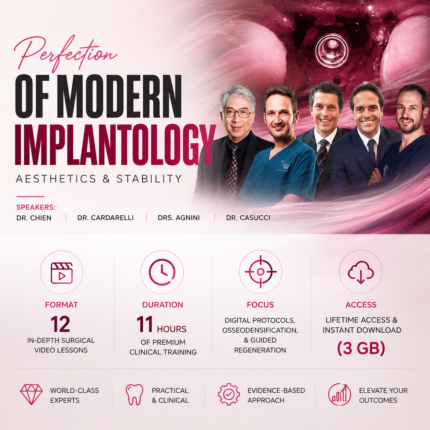
Perfection Of Modern Implantology: Aesthetics & Stability Masterclass
 5.0 out of 5 based on clinical reviews
- Format: 12 In-Depth Surgical Video Lessons
- Duration: 11 Hours of Premium Clinical Training
- Focus: Digital Protocols, Osseodensification, & Guided Regeneration
- Access: Lifetime Access & Instant Download (3 GB)